Accessibility beyond compliance
By Lina Kudo
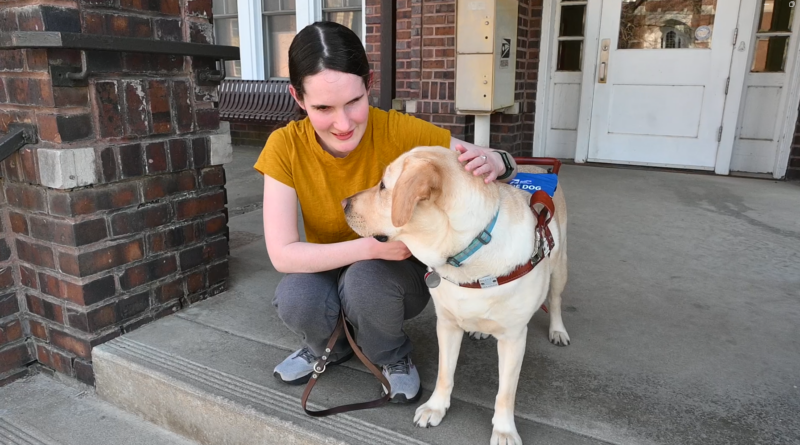
On her way to an 8 a.m. class at Pittsburg State University, senior student Mia Perry suddenly stopped in front of caution tape blocking the sidewalk between Porter Hall and Russ Hall. A plumbing problem was to blame – not a problem for most students – but Perry, who is legally blind, had not been notified about the water pipe maintenance before leaving for class.
“I had to call my dad and be like, ‘Okay, how do I get around this?’” Perry said.
Using Meta glasses connected to a phone call, Perry’s father guided her around the construction area step by step while she tried to make it to class on time.
“I am fortunate to have Meta glasses,” Perry said. “But it was super stressful because I didn’t know where I was going.”
Luckily, she made it to class on time. She was eventually notified about the maintenance, but only after she had already gotten to class with her father’s help.
Experiences like Perry’s raise questions about accessibility at Pittsburg State University, such as how prepared the campus is for every type of person and how easily students and faculty can navigate through accommodations and accessibility resources.
Accessibility is a broad term. From a practical point of view, Perry defines accessibility as “the ability to do what everyone else can do.”
She is a senior student in the English major at Pitt State who has retinopathy of prematurity, an eye condition that potentially blinds people born prematurely.
Perry is legally blind from birth and has been a PSU student for four years living in an on campus dorm. She said that in her freshman years, she used to have a couple of problems regarding sidewalk obstructions, but she believes it was because the university was still learning how to handle communication in those situations.
“I do think they’ve gotten better since then,” Perry said.
She admits that there will be certain adjustments in order for her to have the same circumstances as most people on campus.
“There’s going to have to be certain accommodations that have to happen,” she said. “It is just the ability to have the same information that everyone else has.”
Perry said even though there are some issues regarding accessibility, Pitt State “is a good place to be,” in her experience.
The university’s Americans with Disability Act coordinator, Jamie Clayton, said Pittsburg State University is currently meeting all ADA requirements. However, the university still has improvements that can be done or infrastructure that can be fixed.
Clayton also said that accommodations are interactive, so they may need change. What works for one person might not work for the other.
Accessibility is not only about physical accessibility but also about providing everyone the same level of information access, treatment and resources.
There have been some barriers that Perry encountered along the way on the technological side, such as a Pitt State app not working well on her phone since a recent update.
“It used to work,” Perry said. “It used to be perfect. And then they redesigned it, and now it doesn’t work. My first two years here, I was like, ‘Yay! I can look at everything. I can look at my classes and my grades, and it’s great.’ And then they redesigned it, and now I can’t see any of that without help.”
Perry said she has some ideas on how the university can stay accessible to everyone for a more accurate fit for some people’s needs.
“I just think it’s really important to keep open communication,” Perry said. “Open communication between me and the university, if that makes sense.”
She said there have been times that she had to ask for a change to make particular things accessible for her, to which the university complied after Perry’s requests.
But other than that, Perry overall describes Pitt State as a nice place to be, with warm people.
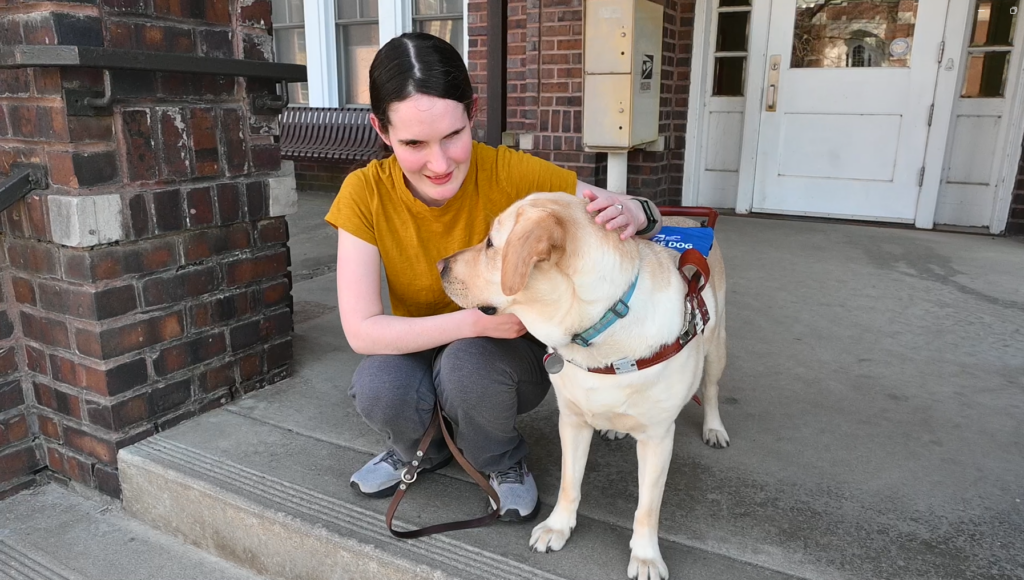
Former ADA coordinator and current director of institutional equity Jamie Lynn Blum said accessibility is a broad term and involves a lot of people.
In her first years as the ADA coordinator, Blum didn’t have many requests or problems reported regarding compliances. But in the last six months, there has been a rise in the number of people asking for accommodations or reporting issues.
According to Blum, this is because more people are getting to know the accommodations and resources the university has available for everyone’s access.
Student disabilities coordinator B.B. Stotts said it is important for every student to know that they can ask for accommodations, either temporarily or for an extended period. The university has resources to make sure each student is in a comfortable environment to study and spend their academic years.
Tyler Antle, a redshirt sophomore football player, found his way to those accessibility resources that Pitt State offers after injuring his fifth toe bone and having to wear a protective boot.
During his recovery time, he was in “the pit,” a specialized training facility where football athletes participate in recovery workout plans. In the pit, athletes can practice and do modified workout sessions meant to reintroduce athletes to their usual training little by little, giving the athlete and their bodies time to recover from injuries.
Antle said that on his recovery days, he received a lot of support.
Accessibility is a requirement and helps reduce barriers for everyone, but it is an endless duty that university administrators say never fully ends.
“I am a believer in that I’m not doing my job if I’m doing the bare minimum,” Blum said. “I’m a proponent of going above and beyond, but there is a big picture. If we’re going to benefit this population, does it inhibit another population, and is it fully accessible for all?”