One day in Frontenac: First Frontenac public library open
By Nathan Danner
Editor’s note: This story was completed as a part of the One Day in SEK project. Once a year, PSU journalism students spend a day exploring one Southeast Kansas town, finding stories and capturing a moment of life in that place. Those stories are collected and saved for posterity by the Pittsburg Headlamp.
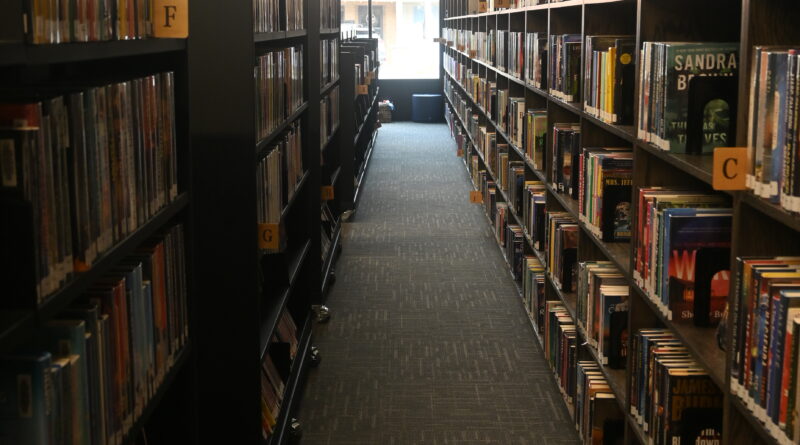
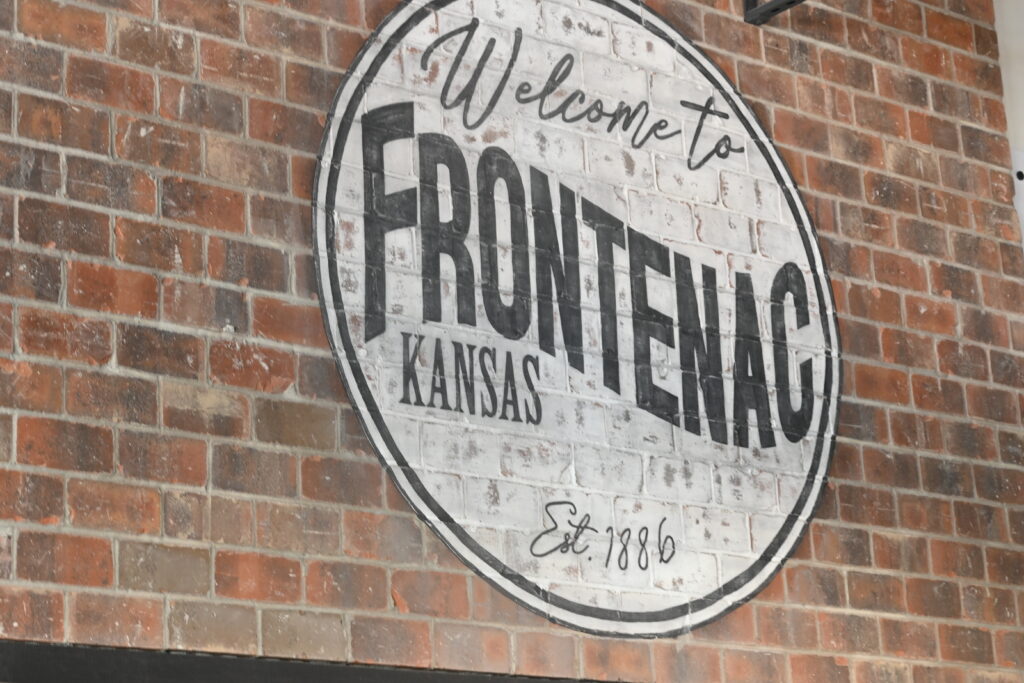
Frontenac, Kansas, which was established in 1886 and has a population of roughly 3,400 people, has never had a public library. The town was close enough to Pittsburg, the thought went, so the town didn’t need it’s own.
That all changed in 2019 when the city was notified it was the beneficiary of a trust left by the Tavella estate. Richard and Jeanette Tavella left $4.6 million to the city to build its first ever public library. Richard grew up in Pittsburg and was very successful in the leather business, while Jeanette was a librarian.
Seth Nutt, is a lifelong resident of Frontenac who graduated from Frontenac High School and Pittsburg State University, was hired in 2022 design a new library. Construction began just 2 years after that. The library officially opened in November 2025.
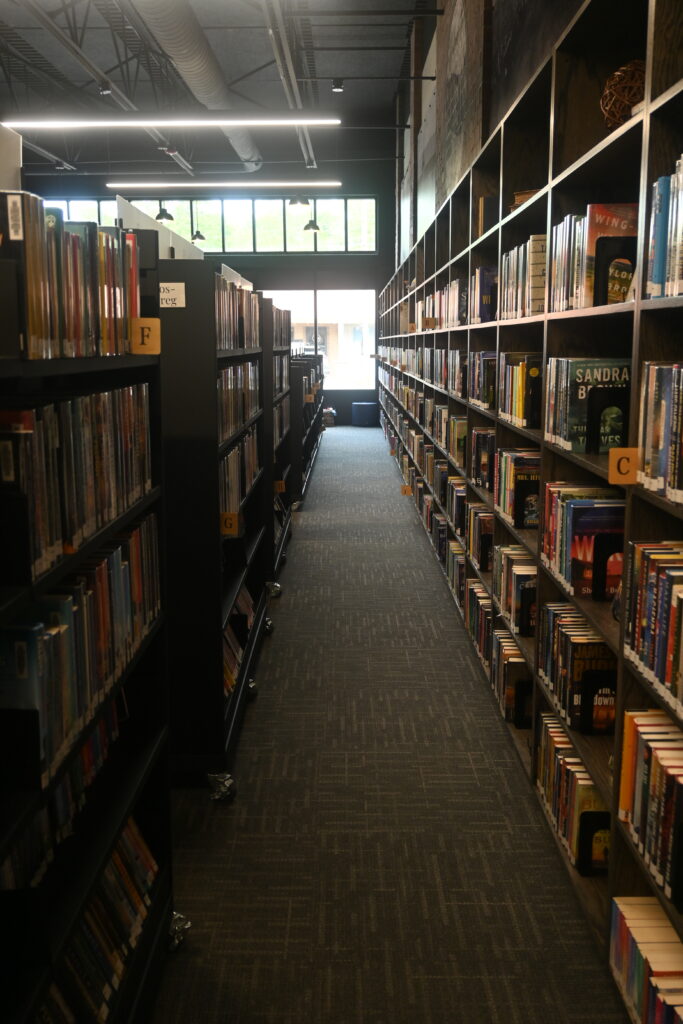
It is meant to not just serve as a library but also as the “living room” of the community. The building in Frontenac’s downtown has over 17,000 books available to be checked out by over 1,000 card holders taking home about 1600 books each month.
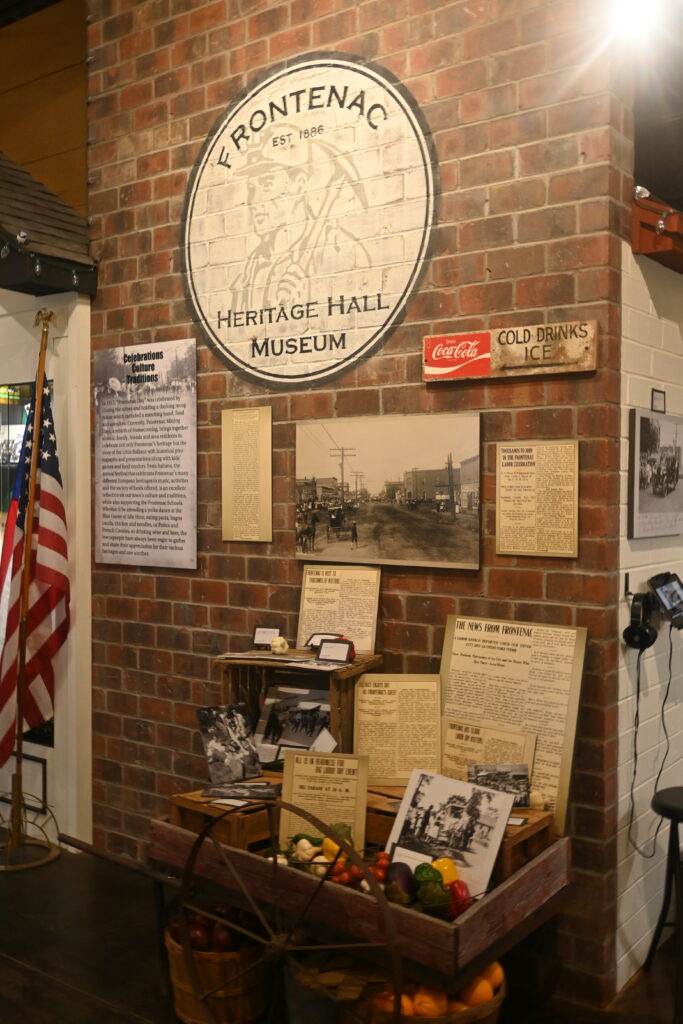
In the back of the library is Heritage Hall, a museum dedicated to Frontenac’s early history that is curated to look like early McKay street with audio exhibits, presentations and artifacts.
From the planning period for this project, the library’s creators wanted coffee to be involved with the library somehow.
“Coffee and books just go together,” Nutt said.
They thought it was a no-brainer to bring coffee in Brad and Andra Stefanoni, owners of McKay Street Coffee, who have deep routes to Frontenac and enjoy serving the small town.
The library is meant to serve the community, and Nutt hopes it lasts for generations so that the future can look back at this moment and see how the town has grown.