Community connections become Pittsburg’s transportation solutions
By Lina Kudo
International students arrive at Pittsburg State University without cars, making transportation one of the biggest challenges for students to adjust to life in a small college town. While city leaders say affordable intercity transportation is difficult to provide for financial reasons, students have turned to rely on personal connections and community programs to help them address their needs.
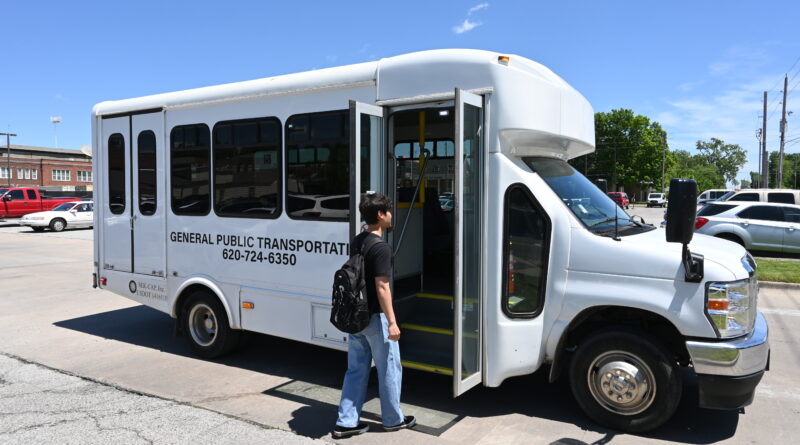
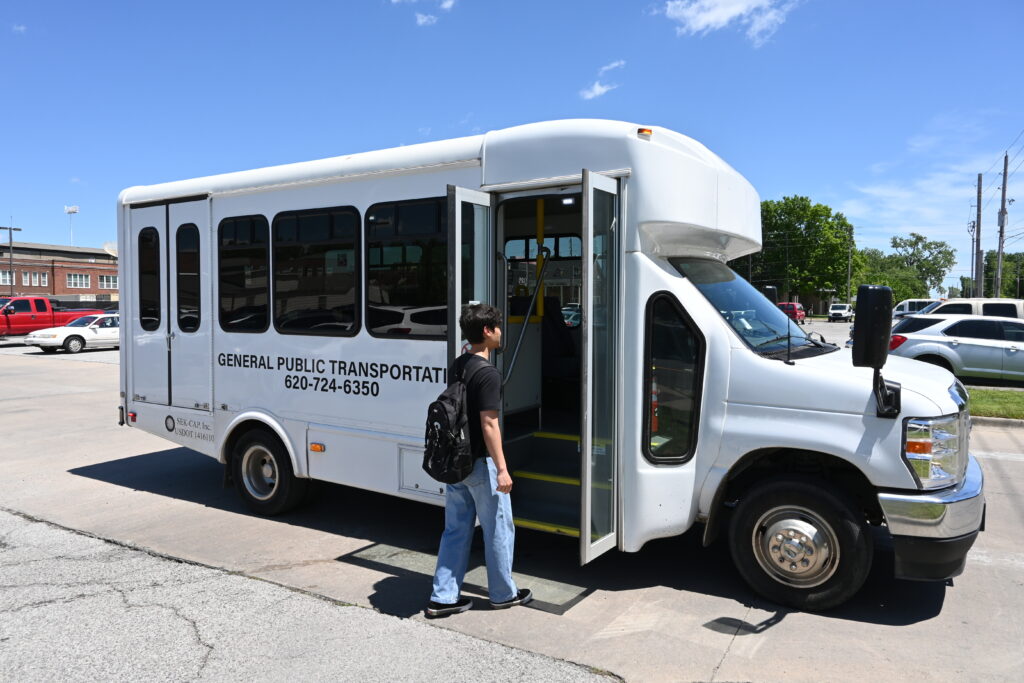
PSU students have options such as the city bus, Gus Bus on campus, and Safe Ride services during weekend nights. There are also rideshare services like Uber. However, for many international students, the bigger challenge begins when they need to leave town.
Spring break flights, family visits, medical appointments or even getting to know nearby cities become complicated because of the lack of affordable and reliable intercity transportation.
Sarah Huang, an international student who came to Pitt State this spring, said she was surprised to find few options when she arrived.
“I’m just wondering why there’s no private company here or locals doing things like that,” Huang said.
Many students had similar concerns about the lack of transportation to the outside of the city. Students from places like Wichita and Springfield who attend Pitt State without owning a vehicle often struggle to travel home or reach airports in nearby cities.
Even transportation inside town can sometimes be unreliable. Although Uber and Lyft operate in Pittsburg, students say there are moments when no drivers are available.
Huang and international students Lina Halverson and Onni Korhonen said they have all experienced situations where rideshare apps had a lack of drivers.
Arthur Chaves is a student who regularly uses the Gus Bus to get to classes at the campus recreation center, but inconsistent GPS updates occasionally cause him to arrive late to class.
Chaves said he would often arrive at the pickup point nearly 30 minutes before his class starts to monitor the bus location online. However, there were times when the bus tracking system showed the bus frozen at a location for several minutes without explanation on whether it was a temporary pause or if it was out of service.
“I couldn’t afford to stay there and wait because if I did, I would miss my classes,” Chaves said.
Challenge to implementation
Pittsburg deputy city manager Jay Byers said that intercity transportation is hard in smaller towns.
“What you’re seeing in Pittsburg is all over the country,” Byers said. “This is not unique to Pittsburg. The transportation structure in the country has changed pretty dramatically.”
According to Byers, communities the size of Pittsburg in the past relied heavily on public transportation systems such as trolleys and buses, which eventually disappeared as automobiles became more affordable for most families and trolley tracks were replaced by paved roads.
Byers also said that implementing intercity transportation would mean sending people away to a neighboring city instead of them staying in Pittsburg.
“There’s a bit of a competition as well,” Byers said. “In general, there’s less incentive for us to send our people over to Joplin. As a person with an economics background, it wouldn’t be beneficial to have that kind of traffic.”
Kim Froman, the director of community development in Pittsburg, said data on traffic flow in and out of Pittsburg already shows more people leaving the city than coming into it.
City officials said taxpayer money is intended to serve transportation needs within the community, making it difficult to justify funding transportation that mainly takes residents outside city limits.
City Manager Daron Hall said Pittsburg is already working to address transportation needs inside town and encouraged students to ask community members when in need of transportation out of town.
“We don’t have the kind of money to be able to do that,” Hall said. “You’re really going to be at the mercy of carpooling. And a lot of people just get on social media and say, ‘I’d like to get to Kansas City today,’ and one of their friends will know somebody that’s driving down.”
Given the current financial and political realities, city leaders said providing reliable intercity transportation is not feasible. However, they said they are continuing to do their best to keep transportation within the community as reliable and accessible as possible.
A community-based solution
While the city has barriers to implement transportation systems that are not realistic to Pittsburg, PSU has focused on building local connections to indirectly solve transportation challenges.
The university’s international office encourages students to connect with local residents through programs like Pitt Pals and Friendship Families. These programs pair international students with local students and families to help them adjust to life in the United States.
Brenda Sigler, immigration and advising coordinator at Pitt State, said those relationships often become valuable beyond simply getting around the region.
“We think the cultural experience is wonderful for both domestic students to have and learn more about the world from international students and vice versa,” Sigler said.
Sigler also said that local churches and service organizations sometimes help students who need rides during emergencies or situations where transportation is difficult to find.
“We’re in an area that’s very volunteer driven,” she said. “Those service groups that if someone needs something—they’re glad to do that, sometimes just for the cost, sometimes for no cost.”
The university focuses on building community networks that help students to find support through friendships, host families and volunteer organizations. It is an indirect approach to adding transportation options in Pittsburg.
“Students need to connect,” Sigler added. “Finding and getting connected with people. We start with orientation, and you meet people, and people are glad to help and the people that have the resources, it kind of happens organically sometimes.”
Good enough
For some students, those community connections have helped them adapt successfully.
Favour Bassey, a graduate student at Pitt State, said that when she wants to go outside of town, she relies on her friends.
“I do have friends from church or just around school that I could maybe text or whatever, and then ask them for a ride,” Bassey said. “That’s why it’s also really good to ask. If you need something, just reach out to friends and see, because I know there’s always people that will help.”
She also said the city buses that run on campus have been helpful to her, and she uses them to commute to her office almost everyday, helping her even more on rainy days.
Despite frustrating moments with the Gus Bus tracking system, Chaves also said the bus remains very useful because it is free and connects students to the major parts of the campus.
He believes the biggest improvement would be to create a more user-friendly and reliable tracking application.
“It would just be interesting to know if you open the map and you see that the bus stopped that it’s going to stay stopped for at most 3 or 5 minutes so that you can add that up to your planning,” Chaves said.
“I feel like considering the size of the university and the city, we have the correct amount of buses running,” Chaves added. “It would just need to be a little more clearer and friendlier for people to understand it.”
Sarah Huang said that although transportation was challenging at first, she eventually adjusted to the slower pace and different lifestyle.
“I’m okay with the situation,” Huang said. “The transportation in general is inconvenient, but I think it’s a different way of life. Because we, as international students, we are supposed to change our living styles.”
She also said that here, traveling takes more effort and commitment than in her hometown, but she has learned to enjoy the extra planning process every travel takes here in town.
“You’re going to put in so much effort to find a way to go to places,” Huang added. “But in a way, you can still find it. So I think it’s just a different way of living.”
Some students suggest smaller transportation ideas that could improve mobility within town.
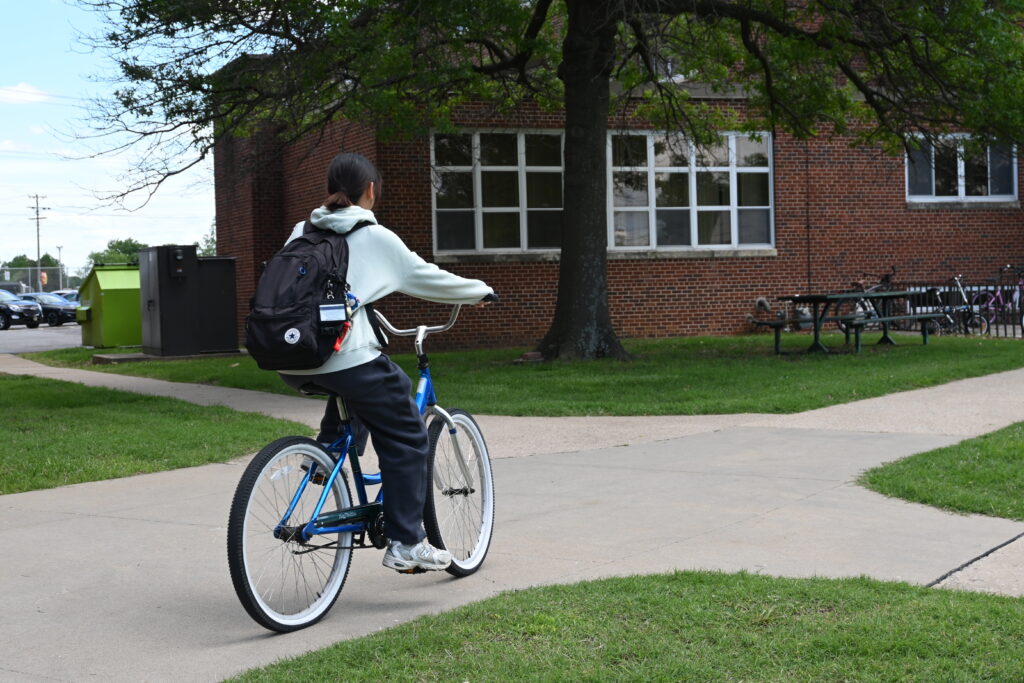
Pitt State student Liberty Scheer suggested the university could offer bicycles for rent to students who do not own cars.
“They can give you a temporary bike,” Scheer said. “I think that would be very, very helpful for any student to at least have a bike to go around.”
Limitations remain
Although community connections help many students, the solution has limitations.
Students often need to ask for favors, build strong personal relationships or pay for private transportation options.
“We understand that the international students that come need to connect with American families, students,” Sigler said, “because then all these things are kind of taken care of. But students need to connect.”
For students without strong local connections or enough money for private transportation, getting outside of Pittsburg can still be difficult. The system also depends on volunteers and people’s goodwill rather than guaranteed services.
“If you really do ask people, I think you can find some way out, but if you’re a passive person, you probably won’t find any ways to go there,” Huang said.