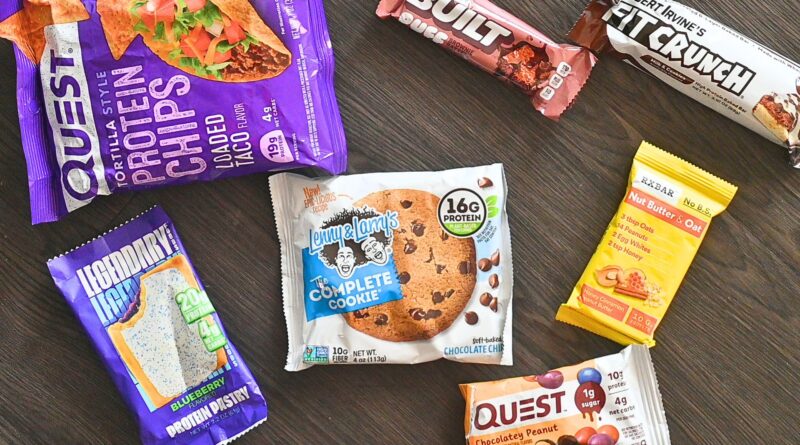
Students discover “protein” doesn’t always mean healthy
By Tyler Antle
PITTSBURG, Kan — Protein has become the newest nutrition fad in the United States, leading many food companies to place a “protein” label on many of their products.
Consumers, including many students at Pittsburg State University, bought into the hype. As time passed, however, many started to notice the underlying health concerns with these products. While protein plays an important role in our bodies, dietitians say the popularity of protein-packed products have led protein to be valued over nearly everything else in our nutritional needs.
“Over the years, it’s like each macronutrient gets its time in the sun, so to speak,” said Jennifer Murray, a professor at Pittsburg State University and dietitian with more than 20 years of experience.
Murray said protein is experiencing what labels like “fat-free” and “organic” went through in the 1980s and 2000s and noted the food industry often swaps one buzzword for another to boost sales.
Matt Moore, a lifelong weightlifter and founder of the new Pitt State Wrestling Club, said these products can often be sufficiently misleading to be considered as false advertising.
Moore said people see the packaging highlight protein on the product’s front and assume it’s healthy.
“What you need to look at is the stuff on the back … you need to dissect it to determine what’s good,” Moore said.
Murray said FDA dietary guidelines have been influenced by outside industries and businesses. She pointed out recently updated guidelines from the FDA that recommend a higher amount of protein and that have stirred up controversy. Murray suggested the CDA might have been influenced by current trends to boost sales of high protein products.
Those advertisements create problems for many people, including students at Pittsburg State University.
PSU student Jax Jeffries said he relied heavily on high-protein labeled foods during a recent weight loss journey.
As a high school student, Jeffries lost 40 pounds of fat. He said his goal was to consume 200 grams of protein each day and be in a caloric deficit of 2,000 calories.
Jeffries said he would average one to two high protein bars a day. He said he was attracted to them by the flashy advertising, which highlighted their protein content and lower caloric content.
He eventually even stopped caring about taste or the price of the product, putting all his attention towards the protein.
“It became almost sickening, and I had to start treating it like a medicine rather than like food for me to be able to actually get it down,” Jeffries said.
At the time, Jeffries assumed that high protein meant healthy. He later learned that many of these bars also had high sugar content, which was something that never crossed his mind.
“I was undereducated on health and dietary issues and didn’t know I was supposed to check or to care,” Jeffries said.
He also received one-on-one advice from a gym in his hometown in Virginia. He was told to eat between 0.5 and 1g of protein per pound of his goal weight. While maintaining a calorie deficit was easy for him, he received no help on how to intake protein properly and no information about nutrients like sugars or carbohydrates.
“I kind of hyper focused on something that, looking back, was important but equally as important as other aspects of diets, diets being just what you consume, not the specific task of losing weight,” Jeffries said.
For many people, the obsession with protein stems from media messages encouraging people to burn fat and build muscle as fast as possible. The rise in products like GLP-1 medications allow consumers to have immediate results of weight loss.
Murray said these drugs are starting to fuel a “panic” for protein supplementation due to a decrease in appetite and, sometimes, muscle loss.
“On these medications, people are eating such little calories on a daily basis that people are saying, ‘you gotta eat more protein! you gotta eat more protein!,’ because obviously they are losing muscle mass as they lose weight,” Murray said.
Murray added that those people need to be sure they’re getting adequate calories daily, but that can be a challenge when one’s desire to eat is being shrunk by medication. She worries that long-term effects on nutrition trends can have an impact on younger generations.
She’s not alone. William Guerrero, a PSU student who teaches part-time at Meadowlark Elementary School, said he has noticed a decline in basic nutritional education for students.
Guerrero said in a recent intruder drill, kids were told to run to a neighboring building. He noticed that several kids were having a hard time completing the run and getting winded.
“These kids have so much energy, but a lot of them couldn’t even run halfway through, and in an emergency situation, that is not a great thing to see,” Guerrero said.
He said due to a lack of proper nutrition education, children are more likely to be sold ineffective products that claim to be healthy and hide their drawbacks.
Murray agreed, pointing out claims like “gluten-free” or “natural flavoring” can be used to trick a consumer.
“People think ‘oh, well, it’s gluten-free, that means it’s healthy.’” Murray said. “Really, the only people that need to be eating gluten-free is if you have celiac disease.”
Murray said that teaching children basic information like how to read a food label and have them learn simple dietary information can have long-term effects on their lives. She said the more you can educate people as they’re young, the more they will carry those values forward in their adult life.
Guerrero said that schools can teach academics, but it’s also up to parents to teach their children worldly skills, including how to take care of their body.
“It has to come up to the parents and parenting at home,” Guerrero said. “Kids are not learning everything they need to know about the world at school. Yeah, they’re learning how to do math … but they are not learning how to interact with the world around them.”